


Ikebana: Finding Calm in Simple Arrangements
Recently with all the snow and frigid temps I have been praying for some hint of Spring. My prayer was answered with the gift of a gorgeous 72 degree day on February 9th!! I am so ready to get in my garden and get my hands dirty! Until then indoor flowers will have to do!
At its heart, ikebana is about harmony — the gentle balance between line, space, and movement. I love how something as simple as a curved branch and a single bloom can capture so much quiet beauty. Every piece feels intentional but never stiff. It’s art that breathes, reminding me that beauty doesn’t need to be complicated to be meaningful.
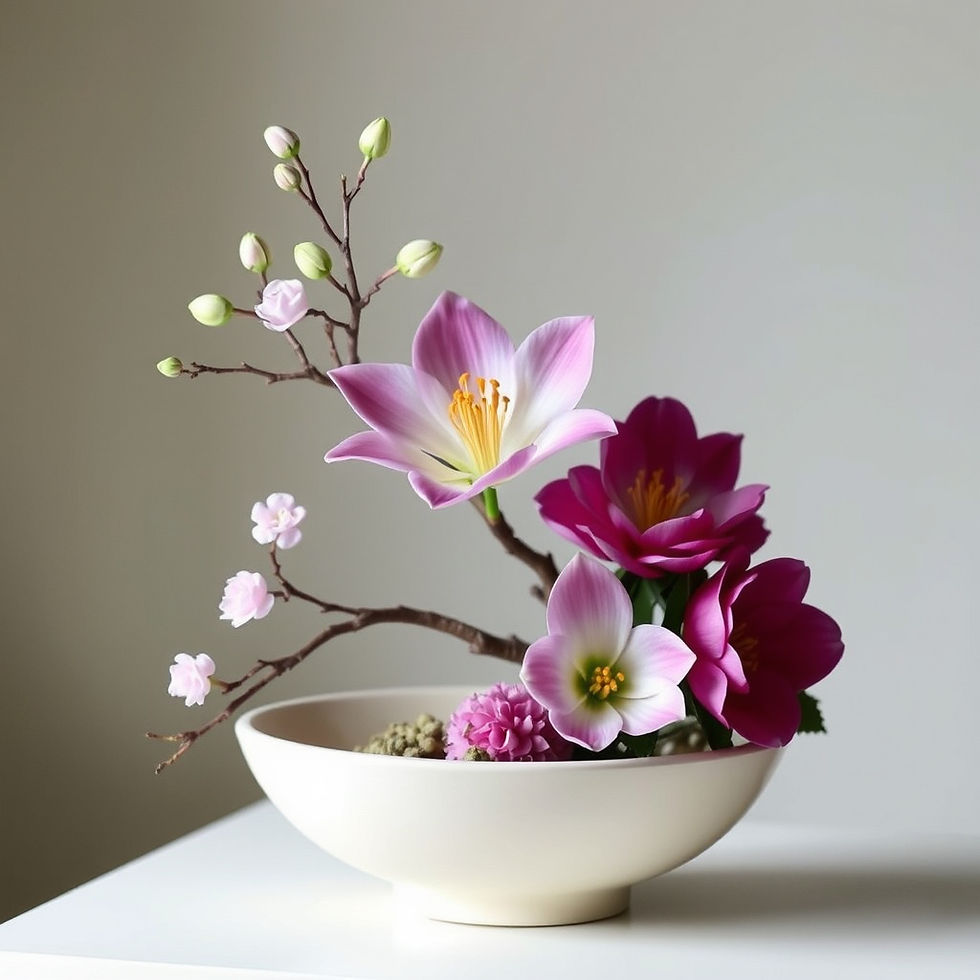
What I love most about ikebana is how approachable it is. You don’t need rare flowers or fancy tools — often, it’s the humble stems from your own garden or a twig you pick up on a walk that make the prettiest compositions. The process slows you down. You start noticing tiny details: the way a petal tilts, how a leaf catches the light, or the quiet rhythm of a stem. It’s less about controlling nature and more about listening to it.

When I practice ikebana, it feels meditative. Arranging each stem helps me tune in to a slower pace, appreciating stillness, balance, and impermanence — things I’m often too rushed to notice in daily life. In the end, the finished piece isn’t just decoration; it’s a small moment of calm, shaped by my hands and nature’s own quiet wisdom.
Take a deep breath, relax and just know, Spring is almost here!!
How to create Ikebana from just outside your front door.....
1. What to Collect from the Yard
Look for materials that have interesting shapes, curves, or textures. Do not just look for flowers; branches and foliage are key in Ikebana.
Branches: Forsythia, fruit tree branches, pine, willow, or any woody, textured branch.
Greenery/Foliage: Asparagus fern, hosta leaves, caladium, camellia foliage, ivy, vines, or palm leaves.
Flowers: Whatever is blooming—daffodils, daylilies, hydrangeas, lavender, or weeds like Queen Anne’s Lace.
Dried Materials: Dried seed pods, dried grasses, or twigs.
2. Tools and Vessels
Vessel: Use a shallow bowl, a low dish, or a simple ceramic pot (called a suiban in formal Ikebana).
Fixer: A floral pin holder (or kenzan) is traditional, but you can use chicken wire, pebbles, or a "cross-bar" fixer (twigs jammed across a tall vase neck) for stabilization.
Scissors: Garden shears.
3. Step-by-Step Arrangement (Moribana Style)
Prep: Place your kenzan (pin holder) in the shallow bowl and fill it with water.
The Main Stem (Shin): Select the longest, most dramatic branch or leaf. This represents "Heaven." Place it in the back-left or center, allowing it to lean slightly (about 15 degrees).
The Second Stem (Soe): Select a branch/flower about 3/4 the height of the first. This represents "Humanity." Place it at a 45-degree angle from the first, leaning in a different direction to create depth.
The Third Stem (Hikae): Select a shorter, more vibrant flower or leaf. This represents "Earth." Place it in the front or opposite side, balancing the previous two.
Refine: Add smaller leaves or flowers to cover the kenzan, focusing on filling space while leaving room for the arrangement to "breathe".
Tips for Success
Embrace Asymmetry: Do not try to make it perfectly symmetrical. Ikebana thrives on natural, "imperfect" shapes.
Less is More: Keep it minimalist. You do not need to fill the bowl with a massive bouquet.
Follow the Season: Use materials currently growing in your yard to reflect the current season.
Give a Fresh Cut: Give all stems a fresh diagonal cut before placing them in the water.


Comments